We were sailing along south of Jacksonville around 1:30 pm on January 28th when Lynn spotted a whale spout off our port bow. We immediately slowed to steerage speed and confirmed that there were whales in the vicinity. I got out on deck and took photos and videos as best I could at that distance, as we followed the guidelines all boaters should know:
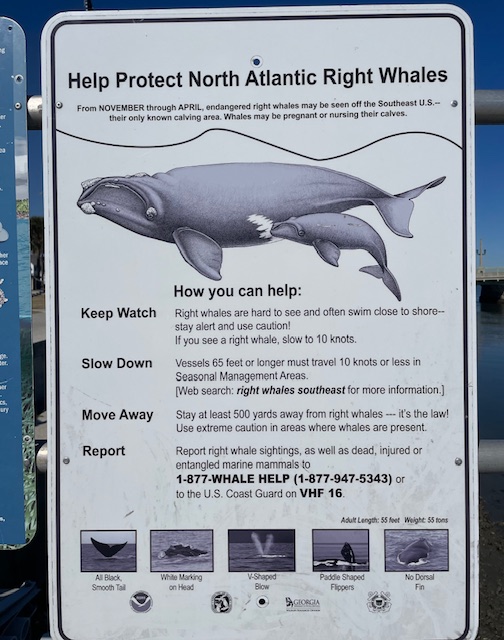
Once we were safely past the group, we hailed the Coast Guard on VHF channel 16 to report sighting what we thought were two Right Whales and provided them the coordinates.
Shortly after that we got a phone call from Jen Jakush with the FWC Right Whale Research Team, requesting further information. Lynn exchanged texts and spoke with Jen while I uploaded the seven videos I had taken so they could confirm our sighting. Jen thought there were likely 3, or possibly 4 adult or juvenile right whales interacting with each other on the surface. She was excited to view the videos on a larger screen, to see if the number could be clarified, and if any identification could be made of individual whales.
Jen let us know that the sighting data would be uploaded to whalemap.org that evening.
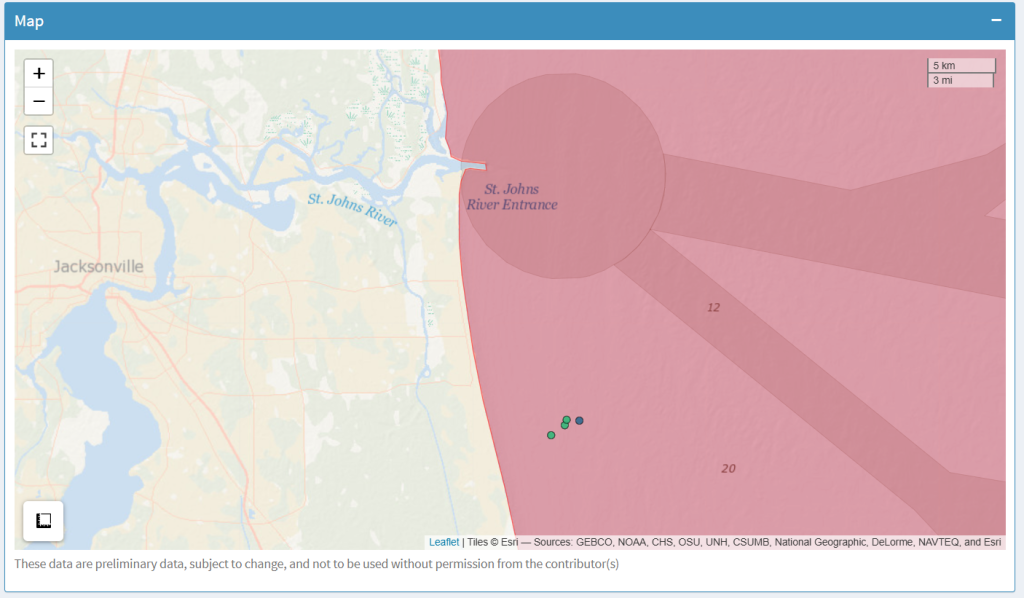
The following morning I checked the map (above) and found the pin for our report, and curiously several other pins nearby. That struck me as odd, there were few vessels on the water that day & it seemed highly unlikely that there would have been that many more sightings in such a short time.
That afternoon we were surprised to get a visit at the boat from Tom Pitchford of the Florida Fish and Wildlife Conservation Commission, along with his daughter Shannon. They stopped by to thank us for the report and let us know what had transpired after that.
A right whale survey aircraft from Clearwater Marine Aquarium Research Institute had responded to the location of our sighting to investigate.
In the end, seven whales were identified and Tom kindly gave us the data and explained how we could learn more. Right Whale sightings are tracked in the North Atlantic Right Whale Catalog. Each whale gets a number and some of them get names. In our case, the plane was able to observe the whales in groups that eventually joined together into one big group:
| Whale Number | Whale Name |
| 4042 | Martini |
| 3981 | |
| 4605 | |
| 3530 | Ruffian |
| 5042 | |
| 3333 | |
| 4601 | Scrimshaw |
It was fascinating to visit the site & see photos of each of the whales, along with the history of their sightings.
Here’s another link that provides excellent information about the right whale calving season and the mother/calf pairs that have been documented so far this season.
The map below shows all of the aerial survey effort (brown lines) conducted by teams based in NC, SC, GA and FL during the month of January and all of the sightings.
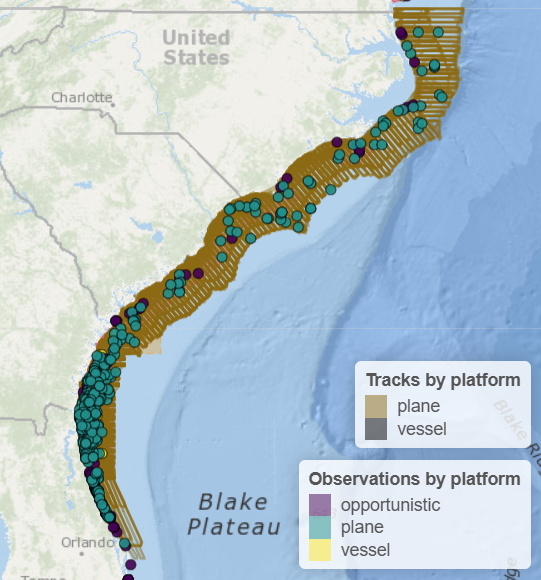
The calving area is large and thanks to the dedication of these teams, efforts to monitor these whales in their calving area is extensive. Also keep in mind that the possibility of boaters encountering whales during their journey exists all along the coast, all winter long, underscoring the importance of following safe boating rules and supporting the efforts to track and protect these magnificent examples of nature’s beauty.
This was an incredible experience, given so much more depth thanks to Tom, Jen and the incredible team at the Florida Fish and Wildlife Conservation Commission!!!